
Franklin County Active Warrants Explained
An active warrant is simply process a Franklin County court has not recalled. The phrase alone tells you nothing about the charge, the issuing court, or how release works. No office here publishes a running list. The closest things to a list sit with the courts and the state's law enforcement data system. A docket records what the court itself entered. The state system holds the operational warrant data that police and the Registry of Motor Vehicles read. Neither is open to public lookup. That leaves the clerk as the practical source. For a local case, contact Greenfield District Court at 43 Hope Street. For a felony docket, use the Superior Court clerk at the same address.
No Franklin County Active Warrant Roster Located
The Sheriff's Office site covers records access, civil process, and facility information. It publishes no active warrant database. There is no downloadable list, no search form, and no county most-wanted roster. Be precise about that distinction. No public list exists in Franklin County's official channels. That is not the same as saying no warrants exist. It clears no one. Anyone claiming a local list exists should name the office behind it. No such office does. The Civil Process Division handles service of warrants and capias warrants.
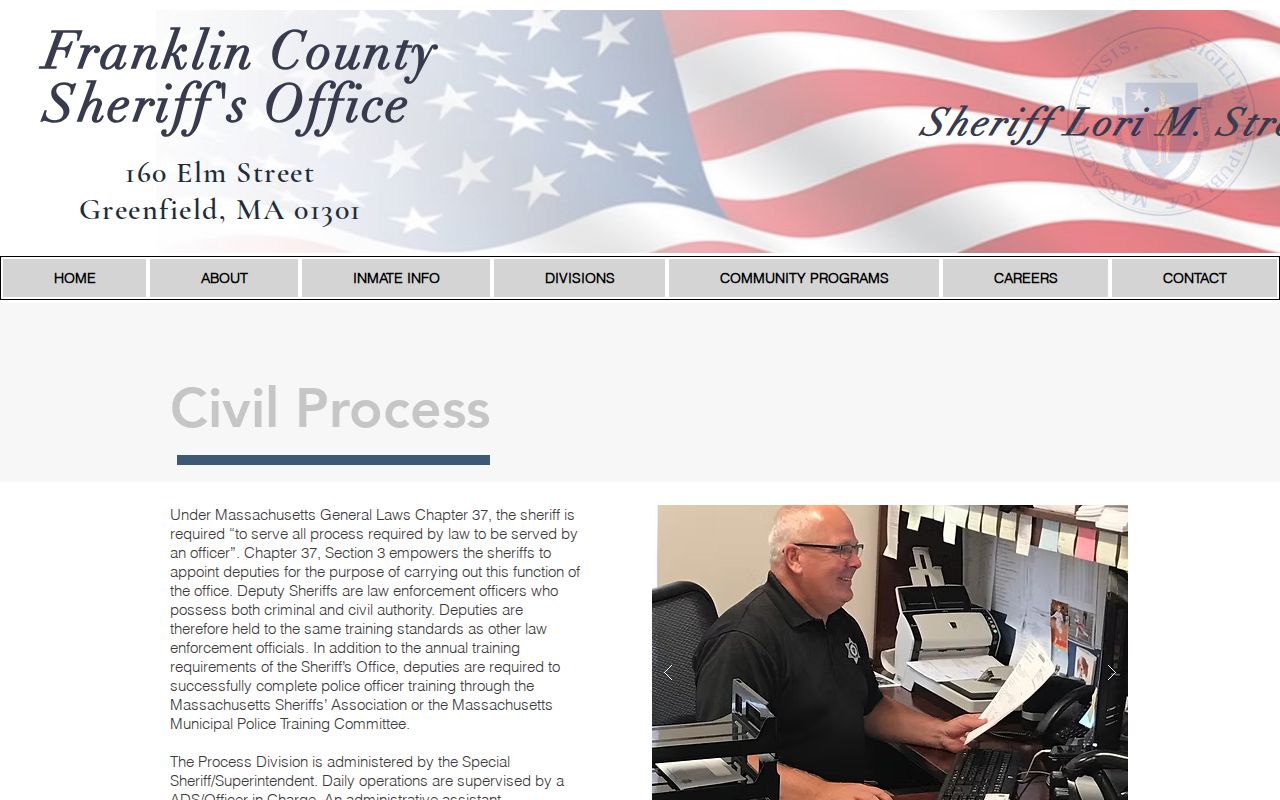
Serving process is not the same as publishing a list.
How Franklin County Tracks Active Warrants
Every Franklin County warrant enters the state's Warrant Management System, and that is where its status lives from then on. The flow is set by M.G.L. c. 276, section 23A: the requesting authority supplies the details, a clerk enters them, and police plus the Registry of Motor Vehicles can then pull the record through the criminal justice information system. Notice who is absent from that chain. The public has no window into the system, so a Franklin County warrant check cannot run through it directly. For the honest answer on where a case stands, ask the issuing court, because status is current only when the court says so. Records move when a court acts. A cached page or an old result tells you nothing about today. And a blank search result proves nothing either, since you cannot see the system to confirm an active warrant is absent.
Franklin County Defaults and Warrants Are Different
On a Franklin County docket, a default often appears long before any warrant question comes up. The two are not the same thing. A default is a record of a missed obligation. A warrant is judicial process that had to be authorized and signed.
| Entry | What it means | Who records it |
|---|---|---|
| Default | A party missed an appearance, payment or other required step | Court docket, entered by the clerk's office |
| Default warrant | Process authorizing arrest after the default | Judge or authorized official, then the state system |
| Probation warrant | Process tied to an alleged probation violation | Judge, on probation's request |
| Recall | The court withdraws the process | Court, then the state system is updated |
A default can sit on a Franklin County docket with no warrant attached. A recalled warrant can leave other consequences running. Read both entries.
Inside an Active Warrant Record
A court record describes the case in Franklin County. A custody record describes time in the Sheriff's care. They are not interchangeable, so confirm which fields you are actually reading.
| Case Number | The docket identifier, for example 1153CV000005, printed exactly as the court issued it |
|---|---|
| Issuing Court | Greenfield District Court code 41, Superior code 78, or the department on your paper |
| Warrant Label | Default warrant, probation warrant, jury-duty warrant or civil motor vehicle process |
| Trigger | The missed appearance or unpaid amount recorded on the docket |
| Notice | State law expects notice before or within 30 days of a default or arrest warrant |
| Current Status | Outstanding or recalled as the issuing court confirms it |
How Franklin County Warrant Recalls Work
A recall is a court action in Franklin County. The record updates afterward. The sequence is short, which is exactly why tracking each step pays off.
Process line: warrant issued and entered, person or counsel contacts the issuing court, the court sets the required step, the judge acts, the clerk enters the recall, and the change reaches the state system without unnecessary delay.
Ask the Franklin County clerk for written confirmation at the counter or by docket entry. Ask when the update was transmitted. If the Registry suspended a license over a criminal failure to appear, a release form or supplemental abstract may follow as a separate document on the court's own schedule.
Warrant Roundups and Most-Wanted Lists
Massachusetts runs a statewide fugitive program through the State Police Violent Fugitive Apprehension Section. Its most-wanted page is a public-safety program, not a court search. It is not a Franklin County sheriff roster.
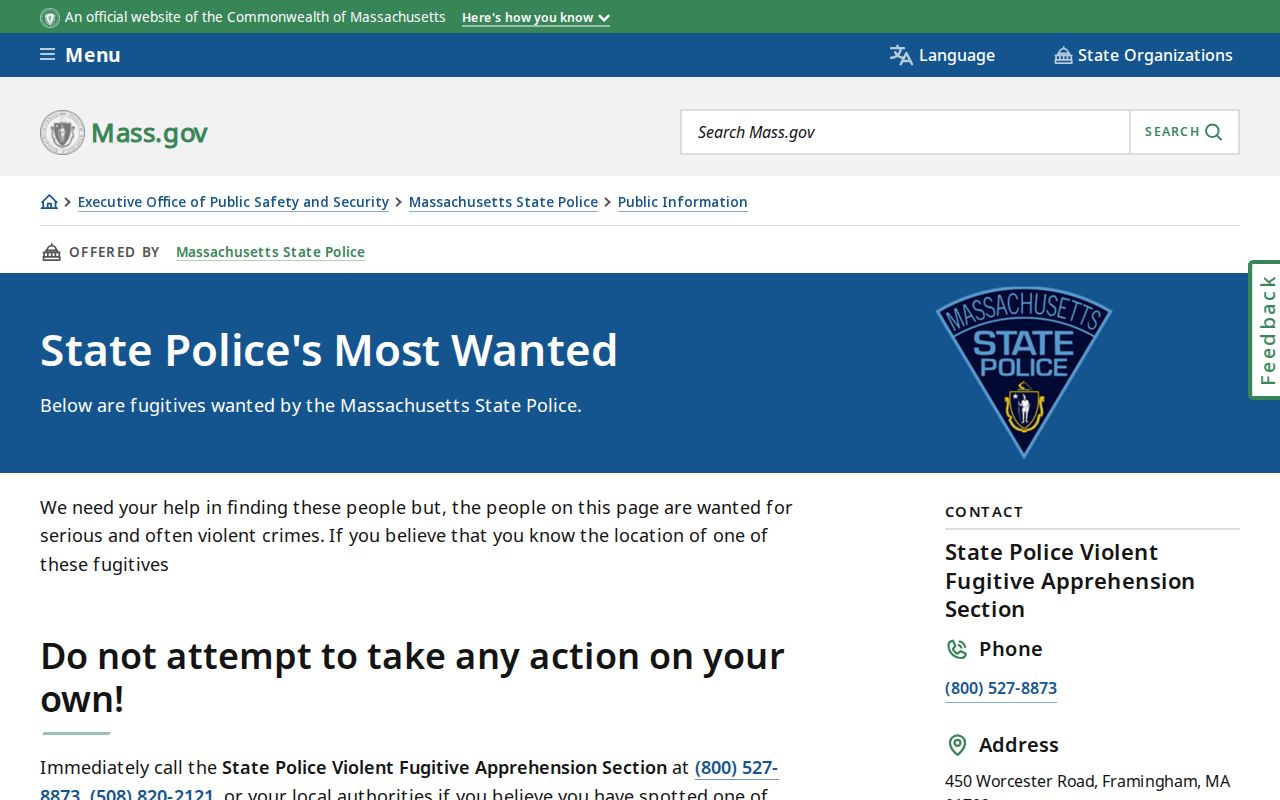
That page shows how a program page differs from a court record, and the county most wanted list page covers the program in more detail. The official instruction there is to report information rather than approach anyone. Tip routes include 800-527-8873 and 508-820-2121, and local police can take a report as well. Franklin County runs no amnesty, roundup, or grace-period program, so treat any private ad promising one as unverified.
Program page, not a roster. The state list exists so the public can report information, not to confirm anyone's court status.
Franklin County Warrant Questions Before You Pay
Money creates trouble faster than the warrant does. In Franklin County, court fees, fines, bail, assessments, and jail account deposits are separate items, and paying one settles nothing else. Ask the clerk three questions first. What exactly is owed? Which item does that amount cover? Does paying it remove the warrant? The state payment portal's own instructions warn that an electronic payment does not remove an outstanding warrant, and the service adds a 3.5% convenience fee. A $50 assessment generally applies when a default warrant is recalled, and a court can waive it for good cause. A $75 arrest assessment can apply in narrower situations involving forfeited bail or a probation surrender.
When Your Name Is on the Warrant List
Your name on a warrant list is only a lead. In Franklin County, the first call is to the clerk of the court that issued it: confirm the case number, the charge, and the warrant's status today. Then bring the whole picture to a lawyer before you act. State bail guidance explains what conditions a judge may set for release.
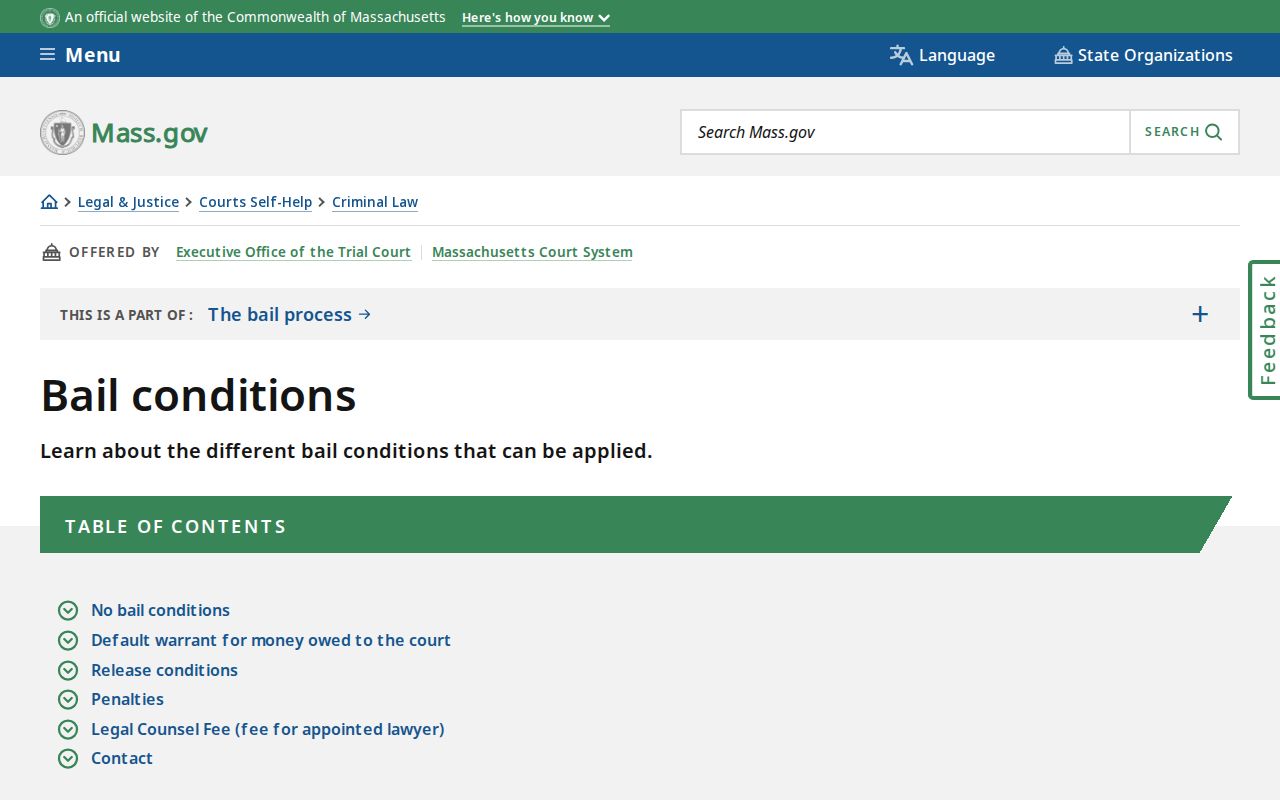
A judge controls release on some of these warrants, so treat the clerk as your best source. Arrive with a written list: which court issued the warrant, what the docket shows right now, what step the court requires next, what fees apply, and how the outcome gets recorded. Take notes and keep them. If a missed appearance, not a new charge, started this, the Franklin County bench warrant search page walks through the clearing sequence.
Franklin County Probation Warrants and Release
A probation warrant works differently from a routine default, and Franklin County residents should plan for that. State bail guidance says a person held on a probation warrant may need a judge before any release. The same rule covers some default warrants that carry a potential penalty over 100 days. That changes the order of calls. The probation office becomes part of the sequence, since the court may want probation's position before it acts on a recall. Greenfield District Court probation sits at 413-774-5531, and Superior Court probation at 413-773-7249. Bring the case number and any prior order with you. Ask probation what it needs first, then ask the clerk how the request reaches a judge.