
Franklin County's Most Wanted Program
Franklin County does not run its own most wanted program. The statewide effort belongs to the Massachusetts State Police Violent Fugitive Apprehension Section, and its roster covers the whole Commonwealth rather than one county. Locally, the Sheriff's Office publishes records access, civil process and facility information on its site. No warrant search, no outstanding warrant list and no county reward program appears among those pages. That picture shapes how any list should be used. Treat a program page as a place to send a tip, never as a record of what a court has decided. For a real warrant answer, the court remains the office to call.
No Franklin County Sheriff Roster Was Located
The Franklin County Sheriff's Office posts no warrant list online. There is no downloadable roster, no warrant-specific phone line, no county reward schedule and no published update cadence. Plenty of sheriff's offices work this way, and the silence is all it amounts to. A missing list says nothing about whether a particular warrant exists. Neither the sheriff's site nor the state pages fill that gap. When the answer matters, take the question straight to the issuing court. A clerk there can confirm a docket entry that no program page would ever cover.
How the Most Wanted Lists Work
Curated is the key word. Someone at an agency decides whose case fits a most wanted program, usually for the seriousness of the charge or the difficulty of finding the person. The list is a small selection drawn from a far larger set of open warrants. That gap matters in Franklin County and everywhere else. Appearing on a page sets no legal status, and staying off one says nothing about whether a court holds an active warrant for an arrest. Program pages also change without notice to the public. A listing can linger online after an arrest, so it may be stale by the time anyone reads it.
Note: the state program page publishes no update schedule, so the live page itself is the only reliable version.
State Most Wanted Programs and Franklin County
The Violent Fugitive Apprehension Section is a State Police unit, and its program page tells the public not to approach anyone listed. Tips go to 800-527-8873 or 508-820-2121, or to a local police department. The section lists its address as 450 Worcester Road, Framingham, MA 01702, and it posts no reward amount and no county-specific update schedule. For a Franklin County report, calling the local department is usually faster than reaching a state unit halfway across the Commonwealth.
Reporting a Tip Safely
Safety warnings on these pages mean what they say. Never approach, follow or confront anyone because of a list. Do not try to verify a warrant yourself. In Franklin County, call the local police instead.
Key Rules:
Call 911 in an emergency, and use the state tip numbers 800-527-8873 or 508-820-2121 for program information.
Report what you know rather than what you assume, including the time, place and any vehicle description.
Never post a person's name, photograph or location on social media to crowd-source a search.
For parole matters, the Parole Board Warrant and Apprehension Unit takes information at 617-376-6269.
Franklin County and the Parole Warrant Route
A wanted parolee runs through a different office than a state fugitive case. The Parole Board route covers people who were under parole supervision, and it carries the same do-not-approach instruction for Franklin County readers.
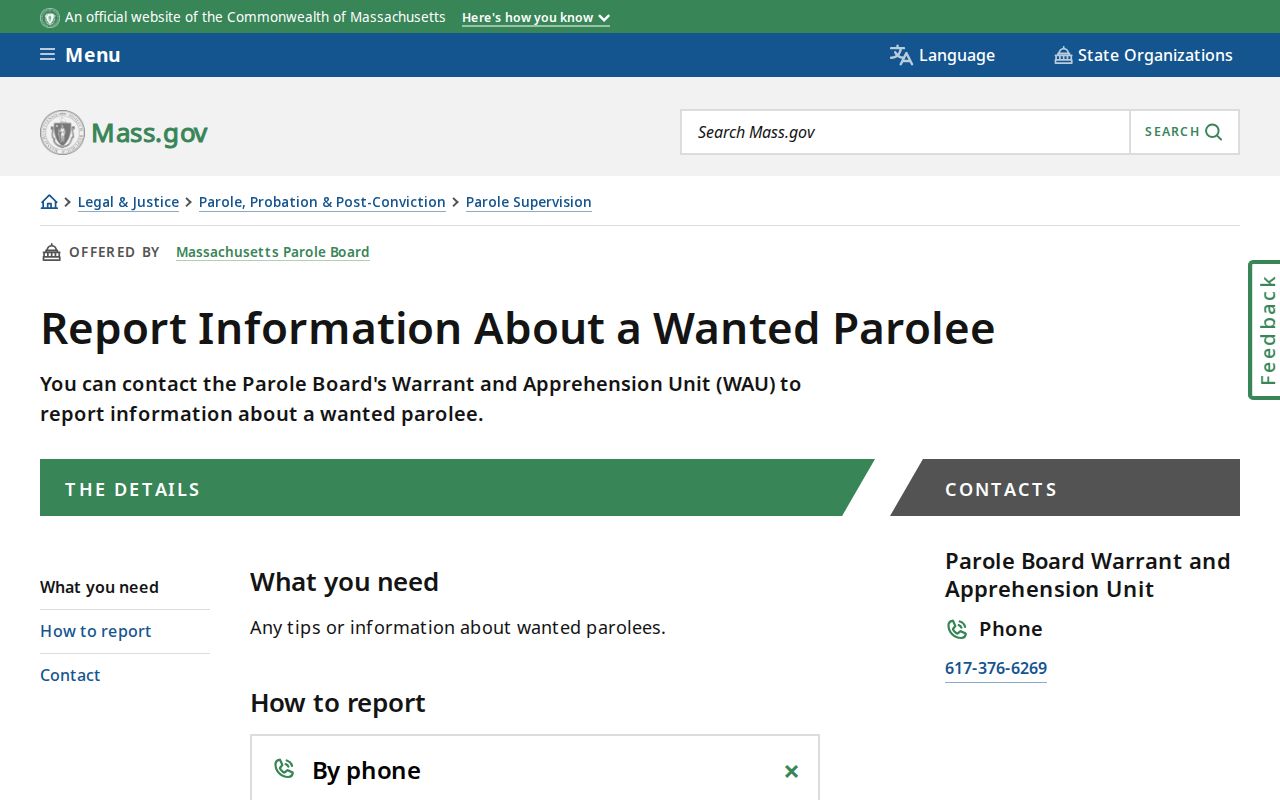
That page shows how a tip route gets published, and it skips names and photographs on purpose so no one acts alone. Keep the two systems straight before you call. A parole warrant question is not a court default question. No Franklin County clerk can answer it.
Most Wanted Lists vs Active Warrants
Franklin County residents often swap the two phrases, but a most wanted page and an active warrant are not the same thing at all.
| Point | Most wanted list | Active warrant |
|---|---|---|
| Who creates it | A law enforcement program | A court, through judicial process |
| How many | A curated few | Every un-recalled warrant in a case file |
| Update method | Program staff, as resources allow | Court entries in the state warrant system |
| How to confirm | Report a tip to the program | Ask the issuing court clerk |
The county outstanding warrants page explains how status is confirmed on the court side.
Franklin County Most Wanted Roles Compared
Three layers of law enforcement touch fugitive work in Franklin County, and each one answers a different question about warrants.
| Layer | What it covers | Contact |
|---|---|---|
| County | Detention, transportation and service of process in Franklin County | 413-774-4014 |
| State | Violent fugitive program and parole warrants | 508-820-2121 |
| Federal | U.S. Marshals fugitive task force covering Massachusetts | 617-742-5533 |
Franklin County sits inside the federal District of Massachusetts, where the Massachusetts Fugitive Task Force coordinates federal, state, county and local resources. That teamwork produces no public county roster. The federal court divisions page lists the Springfield counter.
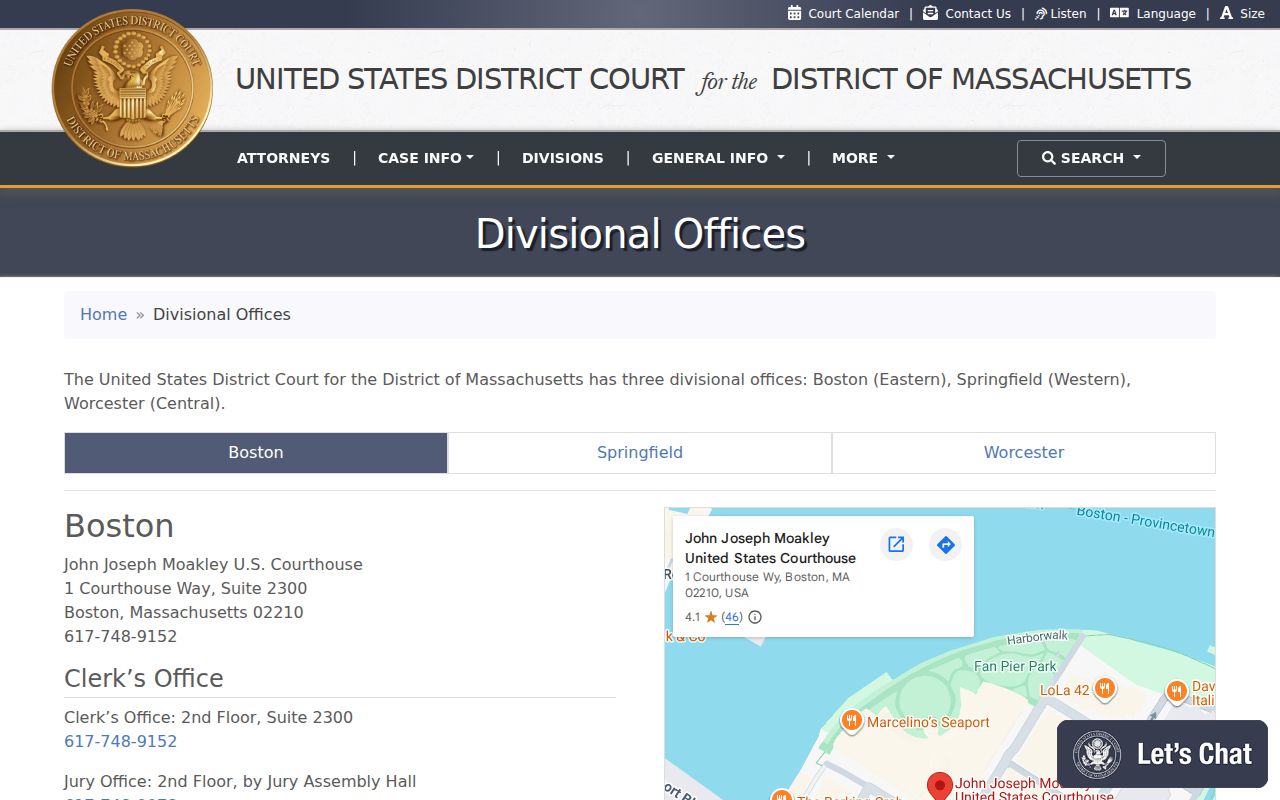
Federal dockets never appear in the state court portal.
If You Think You Are on a List
Finding your own name there is frightening. Talk to a lawyer before you contact anyone. Let counsel raise the question with the right office rather than calling around Franklin County on your own.
Do not walk into a police station to ask about a list. A lawyer can confirm what record exists and arrange how any appearance happens.
If a court warrant is underneath, ask the clerk. The clerk can confirm the case number and the current status, and the Franklin County overview explains the recall and assessment steps that follow.
No Names on Franklin County Most Wanted
Franklin County publishes its most wanted information through the agencies that run each program, and that is where a reader should look. A copied roster goes stale the same day. It also strips away the safety warnings the sheriff or police attach to a listing. A Franklin County program page carries the agency's own framing, and that context matters when a listing changes or comes down. Photographs raise a separate concern. A picture attached to a wanted notice can follow a person long after a case ends. State access rules acknowledge this, keeping juvenile records confidential and withholding some criminal categories from online viewing. The better path for Franklin County residents is simple. Read the official page, and let the agency publish what it chooses.