
Franklin County Bench Warrants Explained
Franklin County courtrooms say bench warrant as shorthand. It usually means someone missed an appearance, a payment or some other required step, and a judge signed process that lets an officer bring the person in. The paperwork rarely uses that phrase. Massachusetts public materials call it a default warrant, and that is the term to use with a clerk. Not every lapse produces one. A Franklin County docket can show a default for months with no process attached, while the court simply mails a notice or sets a new date. What happens next is the judge's call. One more word is worth knowing: capias. State court glossaries use it, and so does the sheriff's civil process list. The label can differ from what you expected. Ask the clerk what the docket actually says before you assume how the matter will be handled.
Franklin County Bench Warrant Clerks to Call
Franklin County's Hope Street complex gives each department its own counter. Call the wrong one and you get transferred. These codes point to the right office.
| Department | Code | Use it for |
|---|---|---|
| Greenfield District Court | 41 | Local criminal, ordinance and civil motor vehicle matters |
| Franklin County Superior Court | 78 | Felony and countywide criminal dockets |
| Greenfield Juvenile Court | J41 | Juvenile matters, with restricted records |
| Franklin Probate and Family Court | P78 | Probate, family and contempt matters |
District and Superior share an address and little else. A number that works in one court fails in the other, and the Probate and Family Court keeps a separate register of its own.
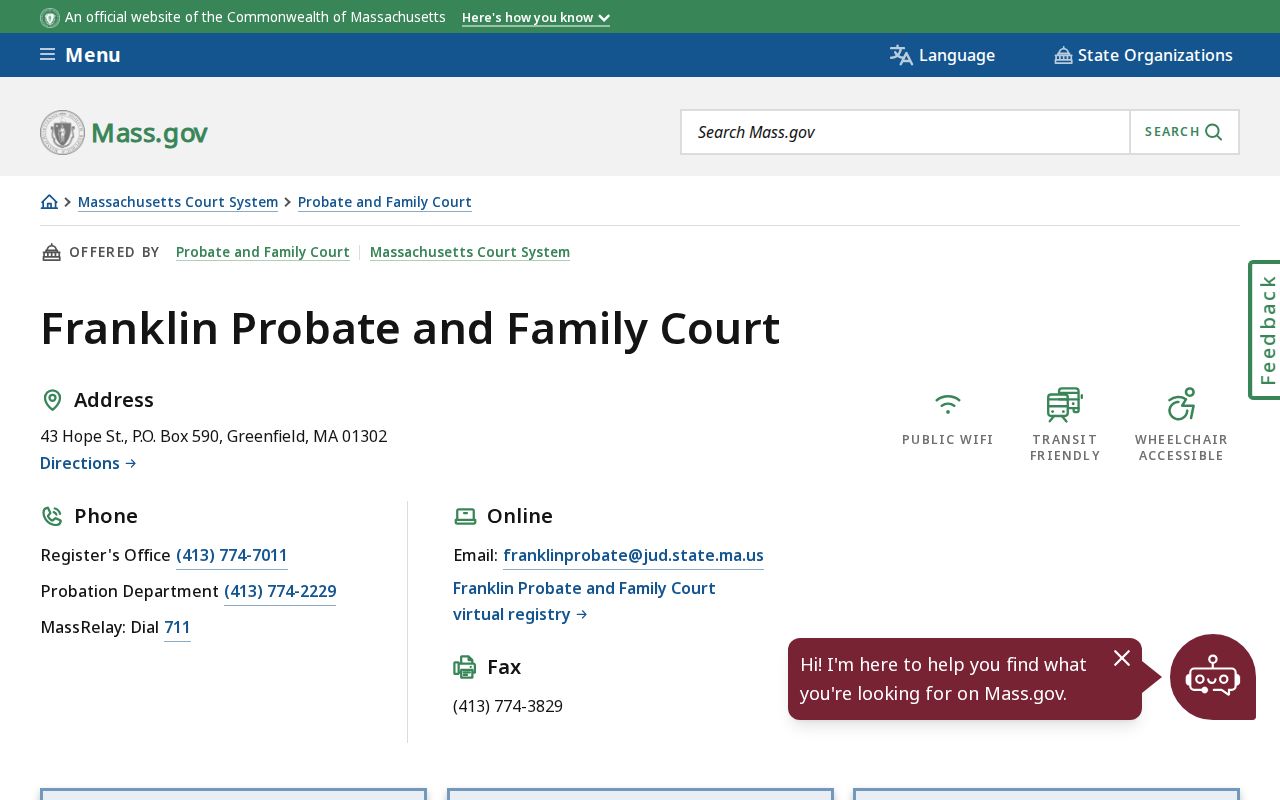
Contempt matters there follow their own schedule.
How Franklin County Bench Warrants Are Issued
A Franklin County warrant never appears on its own. The court records a default first. A judge or authorized official then signs process that names or describes the person and states the substance of the offense. The rule governing District and Superior warrants lays out the required contents and the command to bring the person before the court. State law adds a separate step for missed appearances. Under Chapter 276, a person who skips a summons without reasonable cause can be held in contempt, and a warrant may follow once the summons was issued. Then the Franklin County record travels. The clerk enters warrant data into the state system. Statute expects notice to reach the subject before or within 30 days, and that notice describes the charge, the way to clear it and the consequences. Note: the notice goes to the address on the warrant, so an outdated address can hide the paperwork.
Franklin County Bench Warrants by Trigger Type
Three Franklin County defaults look alike but are not. A probation default involves supervision. The court may want probation's position before release. A jury-duty default runs through the juror delinquency process, which carries its own helpline and proof requirements. A civil motor vehicle default follows the contempt path. Jury questions go to the court that issued the summons, with the juror helpline at 800-843-5879 and delinquent-juror assistance at 877-966-7469. For probation, call Greenfield District probation at 413-774-5531 or Superior probation at 413-773-7249. If your notice names the probation or jury office, start there.
Bench Warrants and Arrest Warrants Compared
Both papers authorize an arrest in Franklin County. They arrive at that power from different directions, and the difference shapes what the court wants next.
| Point | Default or bench warrant | Arrest warrant |
|---|---|---|
| Origin | A missed obligation in an existing case | A charging document or indictment |
| Typical trigger | Failure to appear, nonpayment, probation surrender | Probable cause finding after a complaint |
| First step | Contact the clerk about the default | Talk to a lawyer before any court contact |
| Release path | Varies; some cases need a judge | Set by the court at first appearance |
Neither document is a conviction, and neither one says the underlying charge was proven.
Recall of a Franklin County Bench Warrant
A recall withdraws a Franklin County bench warrant. The case does not vanish with it. The docket keeps going, a new date may be set, and conditions attached to release can outlast the recall. Money usually enters the conversation here. A $50 assessment generally applies when a default warrant is recalled, though the court can waive it for good cause. When the warrant exists only to collect an unpaid fine, assessment, cost, restitution or support order, it states the amount owed plus that $50. Before you leave, ask the Franklin County clerk what will be recorded once the step is complete. Ask too when the state record shows the recall.
Resolving a Franklin County Bench Warrant
Start with the court. Bring a lawyer if you can. A Franklin County clerk can describe what the court requires, but only a judge decides recall, release conditions and any waiver; appearance in person may be necessary, and probation involvement can add a step.
Do not assume a phone call fixes it. Confirm in writing that the default was removed, and ask when the state system will be updated.
Ask about assessments before you pay. Pin down the amount owed, which item it covers, and whether payment alone clears the warrant. The state payment portal warns that electronic payment will not remove an outstanding warrant. The Franklin County court service center can explain the forms.
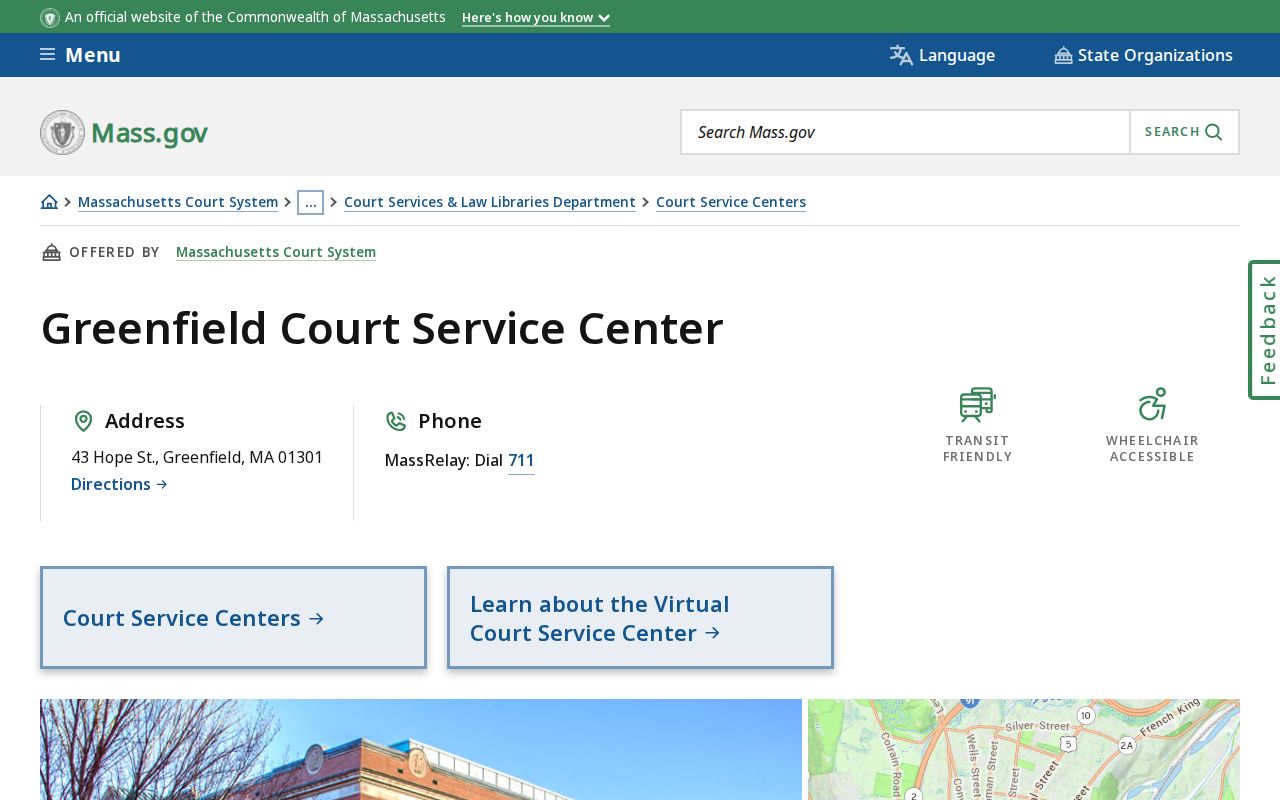
It cannot give legal advice or promise an outcome.
Phone Calls Do Not Recall Franklin Warrants
A clerk in Franklin County can tell you a great deal over the phone. You can learn the case number, the department handling it, and what the docket currently shows. What no clerk can do is change that docket with a conversation. Only a judge or another authorized official can recall a bench warrant, and the record changes only after that order is entered. This is why a person can call, hear that everything looks routine, and still be arrested weeks later on the same warrant. The entry stays live until the court acts on it. So treat any verbal assurance as one step in the process, not the end. Before you hang up, ask what filing, court appearance, or payment comes next.
Finding the Court That Issued the Warrant
Which counter you go to depends on the case. These are the Franklin County offices that handle the dockets where a default warrant most often shows up.
Greenfield District Court
43 Hope Street
Greenfield, MA 01301
413-774-5533
Franklin County Superior Court
43 Hope Street
Greenfield, MA 01301
413-775-7400
Greenfield Juvenile Court
43 Hope Street
Greenfield, MA 01302
413-775-0014
Juvenile dockets are restricted, so that office will confirm far less over the phone than the other two Franklin County clerks. Trial Court Rule 2 governs counter requests for those records.
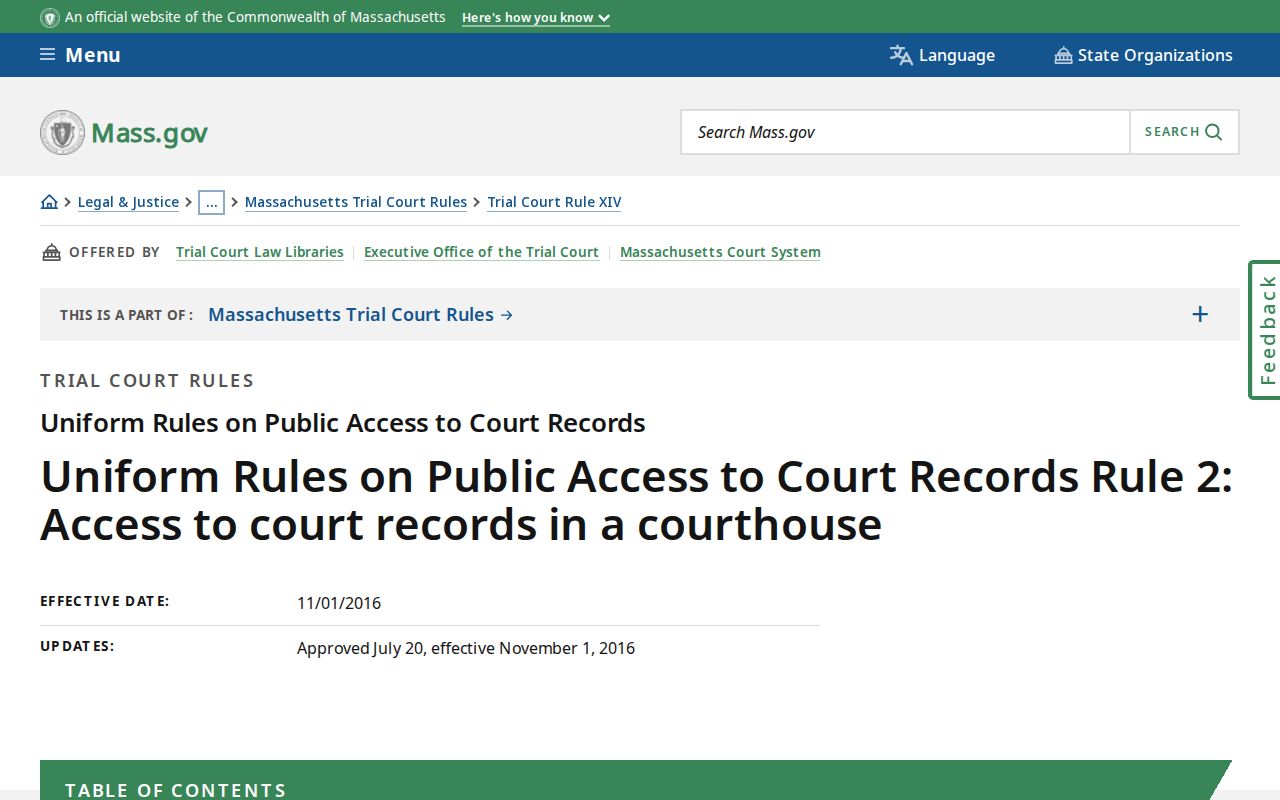
Viewing at the kiosk is free and copies follow the fee schedule.
Franklin County Bench Warrant Proof of Recall
Get the recall in writing. Ask the Franklin County court for a docket entry, an order, or a receipt showing the default was removed, and file it with the notice that opened the case. Two follow-ups matter. Ask when the state warrant system was updated, and ask whether the Registry of Motor Vehicles needs a release form or a supplemental abstract. A court release does not always erase a suspension tied to a conviction. If a record turns out to be wrong, the court search guide points you to the right court department through a request for correction form. Keep a copy of that filing too.